The camera that vanished in the hand.
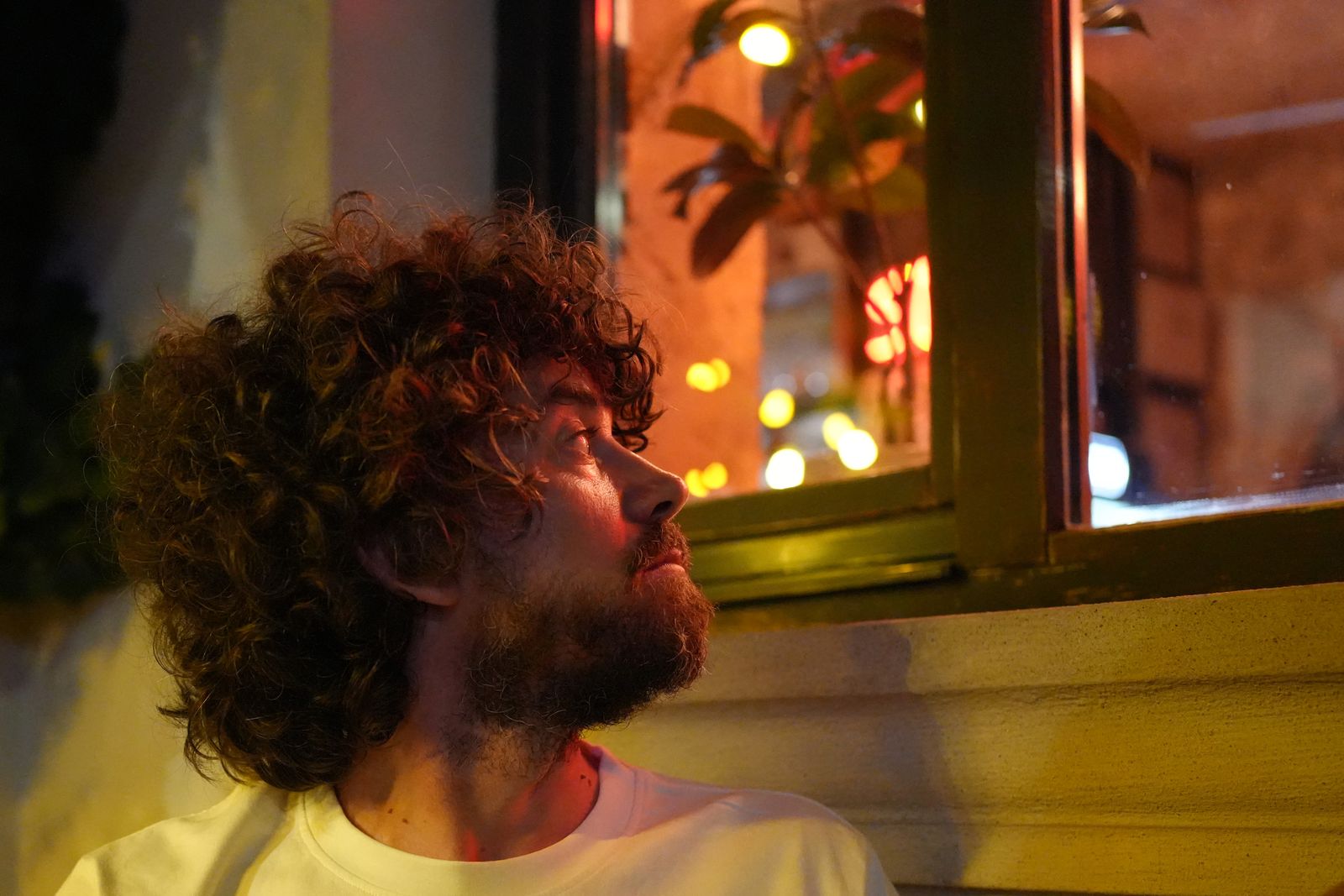
The best photo of my life I took on a Monday night, at a terrace in Chișinău, after the second bottle of wine. Not in a studio, not with lights, not preparing anything. And what struck me isn't that I took it - it's that, the same night, so did the boys. People who never hold a camera, who never went to photography school, and who couldn't believe what they were seeing on the screen.
But let me start at the beginning. Or rather, with the circle that closed after thirteen years.
The longing
Around 2012 I had a Canon 5D Mark II and a small studio where my team shot stock photos. It was revolutionary back then - full-frame, you could film in low light, everything felt like the future. Then I sold or gave away nearly all the gear. And ever since, a quiet longing stayed with me: to own a full-frame camera again. Not for money, not for work. Simply for myself.
That longing sat there for thirteen years. And the thing I feared most was a single feeling - the one from the 5D Mark II, when you've spent three thousand dollars on a body and you hold it in your hand unable to take a beautiful photo, because it's too complicated to set up. Rarely a greater frustration. The expensive camera that makes you feel stupid.
Why Sony (and why it's personal)
I'll be honest: I'm biased. I have enormous respect for this corporation and for Japanese culture as a whole. And it goes back a long way.
I remember how around 1998, from the shop on Sarmizegetusa street, next to Ionel, my parents bought the first little Sony TV, a VHS, then an 8mm camcorder. What a revolution it was back then to be able to film with such a small device. I caught my great-grandfather on tape, and my high-school years too.
And I had, I don't even remember from where, a Sony tech journal - from the days of minidiscs and analog. During summer holidays at my grandparents' I leafed through it to see what marvels were being made somewhere, on the other side of the world. That catalog was an immersive experience. It made me imagine the lives of people who own such technology at home.
Around 2003 I wrote a whole paper about the Sony corporation and its corporate culture, for a semester project at ASE Bucharest. And on mIRC my alias was Mr_Sony_. So yes - biased, at the very least, you'd say.
The choice
This time I wanted a compact camera. One you always have within reach, not a burden you leave at home. I studied - Sony, Canon, Nikon. And I chose the Sony a7C II: full-frame, a quality sensor (that's the first thing you ask of a body), compact enough to shoot anytime, with a great lens ecosystem and friendly to beginners. I went body-only, with a 35mm f1.8 prime - no zoom. I was initially thinking 50mm, but Ricky recommended 35mm. He was right.
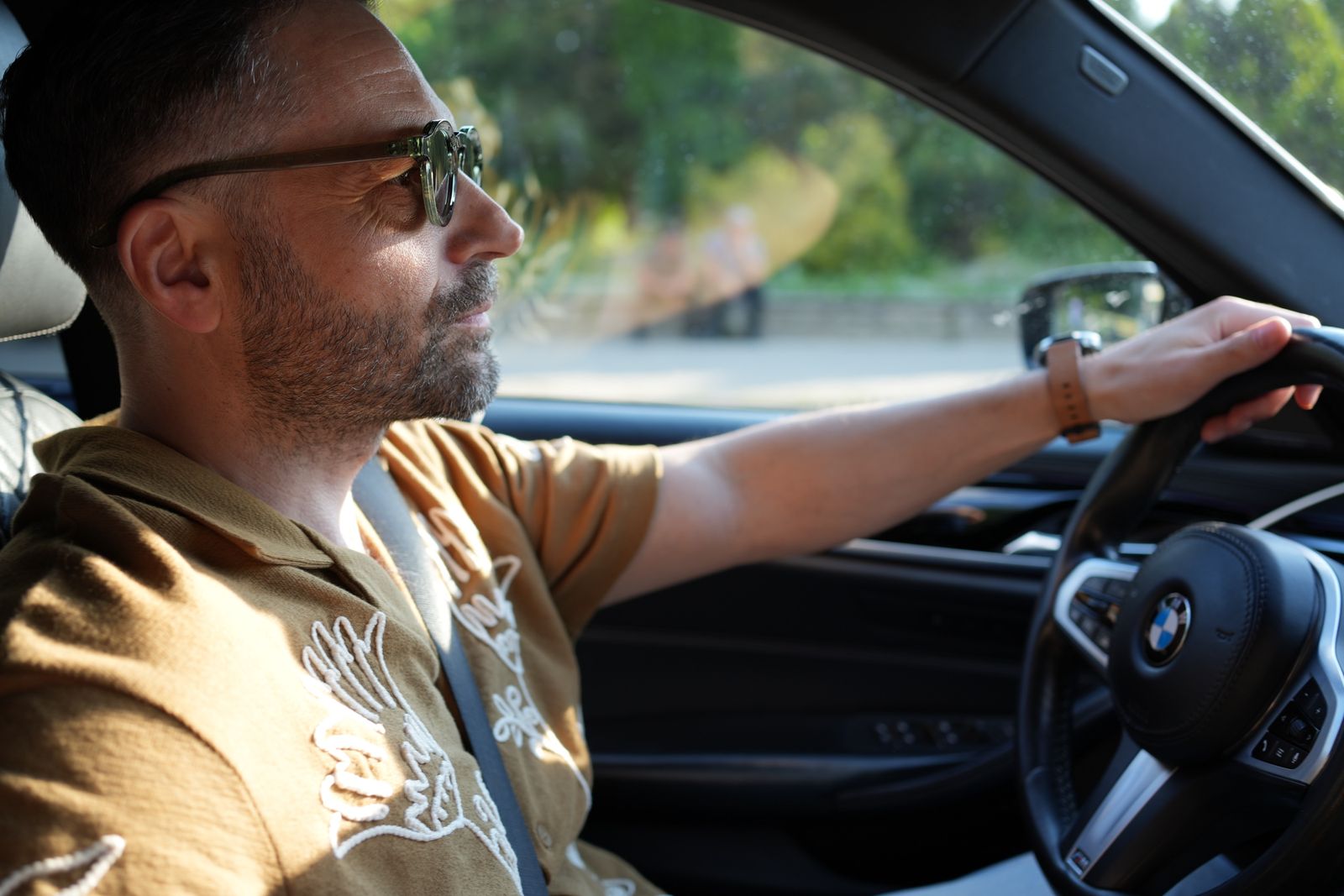
An aside I couldn't ignore: there are very few serious sensor makers in the world, and Sony dominates by a wide margin. Even Nikon, which bought RED and has its own color science, uses Sony sensors. So do Fujifilm, Hasselblad on medium format, partly Leica. Not to mention that inside Google Pixel and iPhone - Sony sensors too. It amused me enormously.
The miracle: point and shoot
After the scare that I'd just bought it and the battery wouldn't charge (Sony Moldova told me to use a charger that isn't fast-charging, so it doesn't go into protection mode - and that fixed it), the miracle happened. I took the first frames, pure point-and-shoot, without thinking about anything. And they were fantastic. Out of the box. The camera understands on its own what's happening in the frame and where to focus, and you think about composition, not about ISO, aperture, shutter speed.
The fear from the 5D Mark II - gone.
The night
So I brought it to Boys' Night. The boys joked, naturally: you'd have been better off with a Pixel half the price and the same result - and I have a Pixel anyway. I tried to explain what ISO is, depth of field, bokeh, shutter speed. After the second bottle of wine, I lost them to the technical terms.

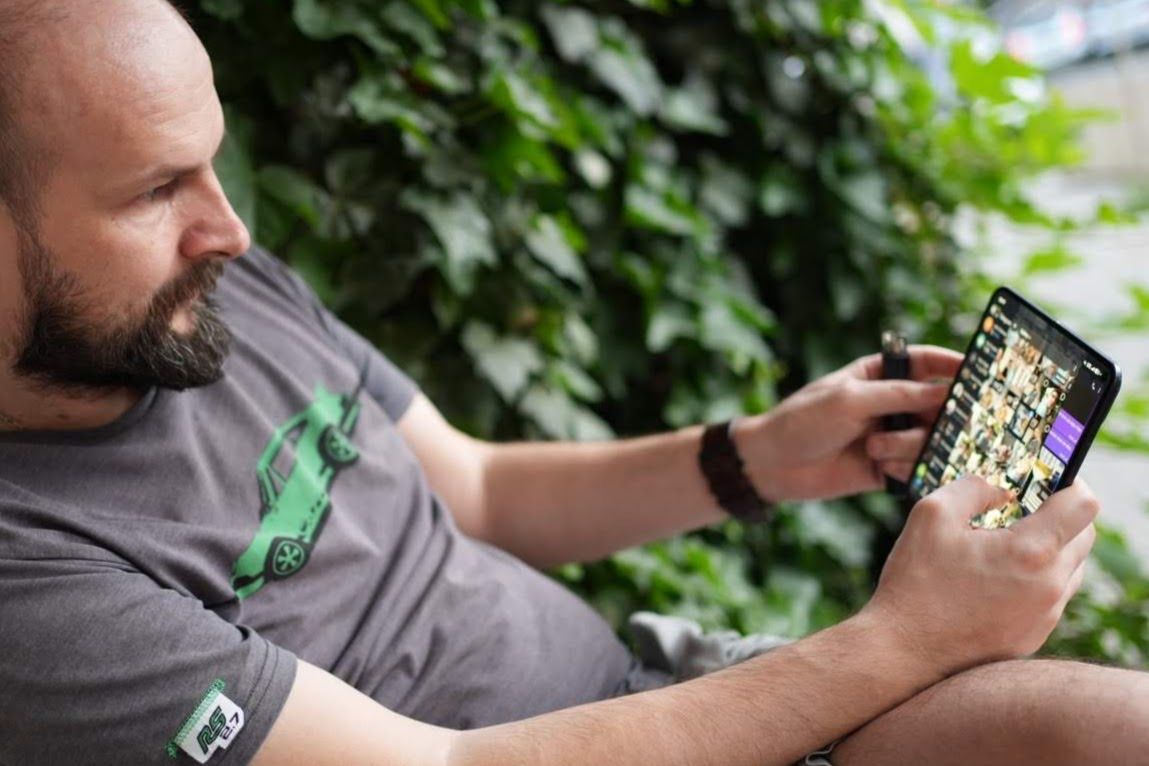
And then something happened. We downloaded the photos straight to the phone, looked at them enlarged - and that was it. No more need for any argument, any theory. The images did the talking.

More than that: the fear disappeared too. The boys took the camera and started shooting themselves. They couldn't believe their eyes. Then they began photographing other people, out of pure curiosity - to see how what they saw in real life would come out in a photo. And it was already quite dark.

For a photo to turn out beautiful, beyond settings and specs, you need soul and emotion. You need the barrier between human and technology to disappear.





The revelation
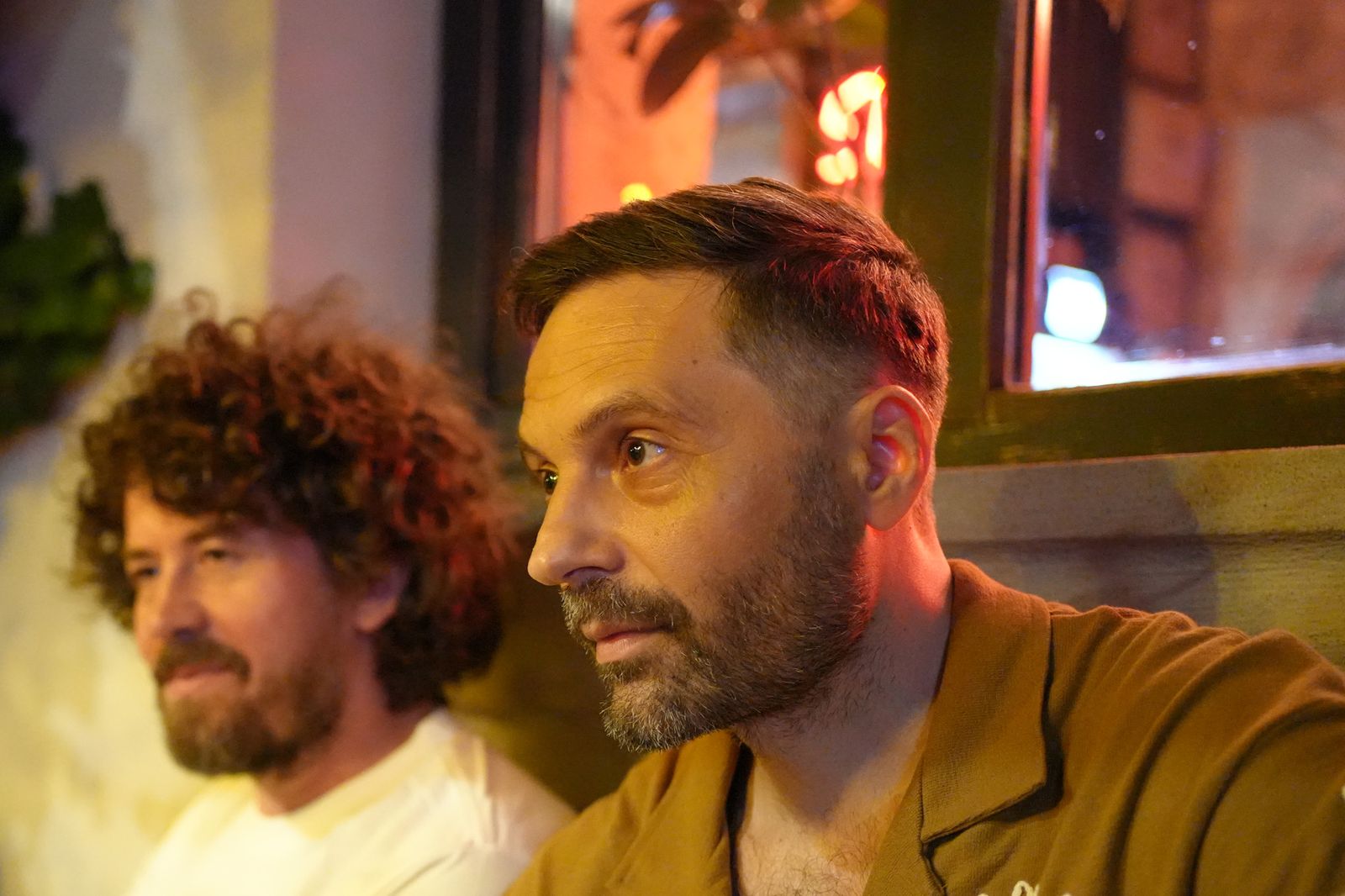
At a table nearby there were some medical students celebrating something. Our boys took a few photos of them - frames that captured the emotion of the moment, the kind of images you can't make in a studio and that don't repeat. If they aren't immortalized in that second, they're lost forever. (They themselves asked us to send them the photos - and we did.)

There was also a moment of pure comedy. At yet another table, two girls - one taking photos of the other with the flash on, in auto. Someone of ours suggested she try without the flash, for nicer bokeh, and showed her how it looks on our camera - with depth, with lights melting in the window behind. And the funniest part: she didn't like it without the flash. With all the bokeh in the world.
The flash incident. Without flash: depth, bokeh melting in the window behind. And still - she didn't like it.Sony a7C II · FE 35mm F1.8 · click for fullscreen
By the way, Ricky - a photographer with over 20 years of experience - has the explanation for what happened there. It's been a trend for a while, born out of the hype around the Canon G7X Mark III: lots of bloggers shoot with flash at sunrise and sunset, and it really does look fine, so people came to believe that any frame from that camera turns out "wow". In truth it's simpler than that - with flash and a few settings, you can recreate that atmosphere on almost any camera. It's not about bokeh, it's about flash light. (Ricky says he shot his demo photos on a Fujifilm, on purpose, to show someone the effect has nothing to do with the Canon.)
And here's the whole moral, really. The camera can give you separation, depth, light. But what moves you stays a matter of the human, not the technology. "Better" doesn't automatically mean "what people want".
Whose credit is it
I, at least, took the best photo of my life that night (it's the one at the top, not the one below) - in my own subjective opinion. And I understood something: the barrier between human and technology has to disappear, so you can both savor the moment and immortalize it effortlessly. Then the camera becomes invisible, and only what you saw remains.

So, whose credit is it? Clearly, Sony's first - for making it. Then the one who appreciates, buys and uses it. But the greatest credit belongs to the people who lived those moments the photo merely witnesses. The best photos were taken by beginners, and the result is impossible to replicate. Because the camera didn't make that night. We did.
Cheers. ★
"All I can say is: woow. With a story behind them, these photos feel completely different. They look great - colors, exposure, composition, all in their place. But the most important thing is that the emotions are caught. The immortalized moment is felt over time, too, when memory washes the rest away. Years from now you'll look at these photos and they'll bring back only warm memories." - Ricky, a photographer with over 20 years of experience

Contact sheet - the rest of the night
All the frames, in the order of the night. Click for fullscreen and settings. All photos and the clip on this page are cropped and compressed for the web - at a small fraction of the original quality.
P.S. - and if you're fascinated by how a lens is made in Japan, watch the Sigma production process. Even though it's Sigma, not Sony - the Japanese culture behind it is still fascinating.
And because these photos deserved more than a screen, we gathered them into a printed album, made with cadru.photo - another project born at the table. We brought it back to that same table. The boys' reaction, below.
Dear Sony,
this article is written from the heart, and we hope it inspires others to take up photography. It stays on Boys' Night, in history, for as long as the site exists.
Slim chances - but if you hear us, we'd love an a7CR and a few lenses from the G and GM line. And an RX1R III, while we're dreaming.
And, while we're dreaming out loud - imagine a camera that stays at the table, at 513. Anyone who passes by takes a few frames, and now and then we print a photo book that stays in the venue's archive. A chronicle in images of every night that ever unfolded at that table.
We, in turn, will keep posting photos every now and then, from our Monday gatherings.
Cheers. ★
Questions, in short
Is the Sony a7C II good for beginners?
In our experience, yes. The first frames were pure point-and-shoot, not a single setting planned in advance, and they were fantastic: the camera understands on its own what's happening in the frame and where to focus. The same night, the best photos were taken by the boys - people who never hold a camera.
How does it handle night and high ISO?
After sunset we shot by the terrace string lights, no flash. The EXIF shows ISO 5000-12800, 1/100-1/160s and ƒ2-ƒ4. The photo at the top is ISO 12800 at 1/160s. The settings are written under the frames and, on click, in the contact sheet.
Which lens goes with it?
We went with the Sony FE 35mm F1.8, a prime, no zoom. I was initially thinking 50mm, but Ricky, a photographer with over 20 years of experience, recommended 35mm. He was right.
Why the a7C II and not another full-frame?
I compared Sony, Canon and Nikon. I wanted a compact camera you always have within reach, not a burden you leave at home: full-frame, a quality sensor, a great lens ecosystem, friendly to beginners. And, admittedly, I'm biased toward Sony.
The battery won't charge on day one. What do you do?
It happened to us right after buying it. The advice from Sony Moldova: use a charger that isn't fast-charging, so the camera doesn't go into protection mode. That fixed it.
How do the photos get to the phone?
Straight from the camera: we downloaded them on the spot, at the table, to a Google Pixel 9 Pro Fold and an iPhone, and looked at them enlarged. That's where the arguments ended.
Where can you buy it in Moldova?
From the official Sony dealer, Sony Center, with a store in Chișinău. On 11.09.26 it listed the body at 38,999 lei and the kit with the 28-60mm lens at 43,599 lei.
The "In short" box and these questions were added on 11.09.26, with answers taken from the essay.
Sources · Verifiable facts. Camera: Sony α7C II (Alpha 7C II, ILCE-7CM2), full-frame. Lens: Sony FE 35mm F1.8 (SEL35F18F). The settings under each photo are read from the frames' EXIF data. On sensors: Sony Semiconductor is the dominant supplier of image sensors, including for Nikon, Fujifilm and Hasselblad cameras, and for camera modules in Google Pixel and Apple iPhone. Brand history (1973 logo, the name, Walkman): Sony · Walkman. Video: the making of a lens (Sigma, in Japan).